Finding Happiness in Selflessness

Media_httpsusanscrups_eocid

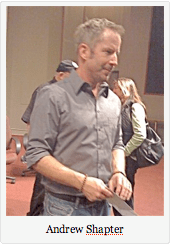
I always like to hear the story (although I’m not sure it’s still in effect) about how Google permits its employees to dedicate 20% of their time to pursuing creative and innovative work of their own choosing. Here at the newly launched SoCo Partners, we’re instituting 20% time not for innovation, but for pursuing civic activism. I’ve chosen domestic and international poverty as my issue. Here in Austin, there are many ways you can contribute to helping the less fortunate. Here are a few causes I am involved with or with which I am planning to be involved:1. For the past two years, my daughter and I have participated in Operation Turkey on Thanksgiving. Bryan Menell turned me onto this from Facebook when we first arrived in Austin. We love doing it. Every year it grows and is more impressive. I plan to do this forever more. Wonderful way to give thanks.2. I’ve recently become involved with Mobile Loaves and Fishes. Last Friday I saw an Austin screening of “Happiness Is,” a beautiful and moving documentary by Andrew Shapter, a local Austin film-maker. Alan Graham, founder of Mobile
Media_httpsusanscrups_igcqu

Loaves and Fishes is featured generously in the film and participated afterward in a live panel discussion with the director. Alan said a number of things that completely changed my worldview regarding the homeless. In Austin we have many intersections where folks hold cardboard signs looking for help. The individuals are as varied as the messages they broadcast to the uncomfortable drivers waiting for the light to change (hurry light!… don’t make eye contact!). I’ve committed to helping Mobile Loaves and Fishes in any way I can apply my hands and heart and possibly socialweb and collaboration know-how to helping their cause. We are cooking up a fun project for SXSW called “Twegg.” Details are still being worked out, and I will be blogging on that shortly. Be sure to plan to attend Jon Lebkowsky’s Plutopia Monday night, March 16, which will showcase a large part of the initiative. Information on Mobile Loaves and Fishes (MLF) is available on their web site. Please considering donating.3. I met Tina Williamson over a year ago at her Christmas party. Tina has launched a program called, “Women Worldwide.” Women Worldwide has as its mission to enable women to help other women around the world. She recently returned form a trip to Mali in Central Africa. You can hear Tina’s story about what her team did there and the inspiration for Women Worldwide over on vimeo. I’m helping Tina leverage social media to raise awareness for her initiatives.4. I’ve become a student of poverty and am particularly interested in generational poverty issues. I picked up three books on poverty and have set aside time to read each one. I’m currently reading, “Nickel and Dimed” by a wonderful writer, Barbara Ehrenreich. She also wrote, “Bait and Switch” which has a lot of relevance for today’s economic downturn, as it focuses on white collar unemployment. A book I bought for the shock value of some of the demeaning language is “Bridges out of Poverty.” More on that one when I read it all the way through. I’m also subscribing to the Poverty in America blog on change.org. Learning a lot there.It was @timoreilly who motivated me to “work on something that makes a difference,” while we’re navigating through the vagaries of economic turmoil. Even though in his most recent posts on the subject he wasn’t advocating pure charity work, it forced me to look carefully at what I’m going to commit my time to. My goal is to help my non-profit friends to learn how to leverage the social web to make their work more productive and rewarding.Finally, the trailer from “Happiness Is.” Enjoy.
A Farewell to Arms

My daughter tells me I’ll never pull off this post. Her initial reaction was, “OMG, please don’t ruin a classic piece of Literature!” Ernest Hemingway’s A Farewell to Arms was, according to Wikipedia, “Considered by some critics to be the greatest war novel of all time.” It’s about young Lieutenant Frederic Henry, an American ambulance driver serving in the Italian army during World War I. The book takes several twists and turns including Henry getting wounded and spending time on the front where he is caught in a bombardment by enemy forces. How does Frederic Henry relate to me? Why through Monty Python and the Holy Grail, of course.

Stay with me. Arm #1 = Web 1.0. (aka dotcom bust)

This beloved platform we’ve come to know as the Internet has been brutally battling me for ten years now. In the 1.0 era, I got swept up in the irrational exuberance and joined a company where I swiftly suffered several personal economic blows when the company I joined went out of business and I lost all my savings on investments that tanked and I was rendered unemployed by the eventual bankruptcy of the startup I joined.  (Ouch.)

Arm #2 – Web 2.0. (aka socialweb)

Fast-forward to 2006, I came back into the workforce after a nice, long break. About that time, I was once again swept up in the excitement over web 2.0 and what these incredible changes could mean for business. I discovered some smart folks talking about Enterprise 2.0 and was hooked. I blogged about being on the front lines of a valiant battle (Like Frederic Henry), ready to charge the hill of corporate complacency. This new wave of enterprise transformation is even more exciting to me than the hysteria that whipped up during the late 90s. I sailed past the third anniversary of this blog this month. Shortly before the Christmas holiday, I found out I was being laid off. Around that time, I also found out that because of the mudslide in housing values, I had lost virtually all the equity in my home I’d been unable to sell in NJ and now bear the burden of my own toxic asset.  So, web 2.0 is turning out to be more seriously damaging to me financially than 1.0 was. (And I didn’t think that was possible.) I’m writing this candid view into my personal life to explain why I am still ready to keep fighting.

Call me ignorant, call me a sentimentalist, but I believe in the power of the Internet to change the world. There, I said it. Leveraging technology to change the world for the better has been a lifelong ambition of mine. It’s the reason I chose computer science for a career and pursued a career in technology. For a long while, I spent most of my days in tech driving toward improved quarterly earnings for one company or another.  In 2009, everything is changing.  Technology has been such a powerful force in uniting people around the globe, and the impact the participative social web has had on the global political stage is unprecedented in modern history. There’s a lot that folks born in my generation that grew up in the 60s and 70s aspired to achieve.  The technology platform our global tribe is creating will enable those idealistic dreams of youth. But, like Obama says, there is much more work to do. One half of the world’s population has still not made a telephone call, yet tools are getting in the hands of people who can really make a difference. This simply thrills me.

So to those who would tell me to just give up, to admit defeat, to look for a new, more stable occupation, I say, “Bollocks. It’s just a flesh wound.” I just have to make sure the lights on my cable modem don’t go dark.

"Always Make New Mistakes!"

Media_httpsusanscrups_hkbdf

I began this post last week when the recent blogstorm over Ketchum interactive VP, James Andrews and a questionable exposed email from a Fedex staff employee threw the blogo/twittersphere into a hightech lynching of Mr. Andrews, who has in my view, become a hapless digital transparency hero.The incident showcases how responsibility, privacy, constitutional rights, influence, transparency, and well, new rules of the digital era will present us all with new and interesting challenges.In case you’ve missed this, please prepare with the introductory reading assignment:

  • Andrews’ tweet as he arrived in Memphis, hometown of Ketchum client, Fedex.
  • PRinfluencer, Peter Shankman (with 20K+ twitter followers. That’s > /steverubel, but < /chrisbrogan), who exposed an email from an unhappy Fedex employee with this post.
  • @olivermarks’ crossover post to the e20 community.
  • You can see more blogger reaction here.

I borrowed the headline for this post from Esther Dyson who signs her emails with “Always make new mistakes!” It’s become such a trademark for her, it’s refrigerator magnet worthy. I’m choosing Esther’s slogan to frame my reaction to this new twitter-gate episode partly because of her long-time advocacy for Internet privacy, but also because of her belief that we can only learn through experience. Sometimes we’re right and sometimes we’re wrong, but in the end, we all benefit from the lessons learned.Oliver Marks says in his post, “no one comes out of this looking good.” So, yes. I agree mistakes were made. But, what’s more important is what can we learn from this?On PrivacyThere were two privacy issues in this case study. The first involves Mr. Andrews’ personal thoughts telegraphed to the world. Because of Twitter’s ubiquity and real-time reach, Andrews forfeited his right to privacy here. A right he chose when he unprotected his tweets. The second issue is related to the privacy of the individual who sent the damning email and now has perhaps embarrassed Ketchum and Fedex for being mixed up in a socialweb skirmish. Did the Fedex employee intend for Shankman to expose Andrews? If so, he/she gave up his/her right to privacy. If not, Shankman has some explaining to do. This incident reminds me of another social media expert who found herself in a dither with the social media community over a private email she sent to friends that also was posted (and exposed) via a blog. That was the Debbie Weil case. Different set of principles and values, but another lesson learned for all who jumped into that one. Regardless of where you stood on that issue, Ms. Weil’s privacy was jeopardized and led to a social media embarrassment for her.On ResponsibilityYes, “Think before you tweet.” It’s like Microsoft told Scoble, “Blog smart.” On the social web, we are what we tweet and what we blog. Going forward, as the social web colors in the paint-by-numbers portraits of our true character, we will need to stand on our principles. Where we have prejudices, they will be revealed. Nonetheless, I’ve been in the ad agency business. In many ways, I found it was that rare combination of Emotional Intelligence and IQ that made the best ad executives. The account executives and creative groups who were sensitive and respectful of the clients’ values succeeded in creating great campaigns and developing longstanding client relationships. We can ding Mr. Andrews on a breach in sensitivity here, knock a point off his performance review, but to call for his dismissal is a giant step backwards in the national discussion on transparency and openness.On Freedom of SpeechTwitter, YouTube, Blogs, Facebook, MySpace, Flickr– all of these open social media are lifting our voices. We are all being heard. We have a right to object, to argue, to agree, and to embarrass ourselves. Just like the pre-Internet age, with that powerful right comes the great responsibility to suffer the consequences when we fail to self-censor. I urge all of you who are active in online activities to learn more about Internet freedoms. Two good places to start are the Electronic Frontier Foundation and the OpenNet Initiative.On InfluenceJacob Nielsen’s 1/9/90 needs to be re-interpreted to explain the influence the 1% is wielding in shaping public opinion on the Internet. When eruptions such as the Ketchum/Fedex-gate occur, it’s incumbent upon the socialweb-orati to explain the significance of the events as well as argue their side of the debate. It has disturbed me that the loudest voices on this issue are coming from the PR/social media community who condemn the agency VP handily without seriously weighing the ramifications of lynching Mr. Andrews for what amounts to a personal opinion.On TransparencyWe’re entering a new era of openness and transparency. Transparency rests on a platform of truth. Transparency is our ally, not our enemy. Yet, transparency’s ugly twin sister is accountability. You can’t date one without the other. Will we hold Andrews accountable for Ketchum losing the Fedex account? I hope not. But should we be held accountable for what we say online? Yes, but within reason.Mistakes are the only way we will progress toward a universal protocol for our acceptable digital behaviors. May you make many of them!